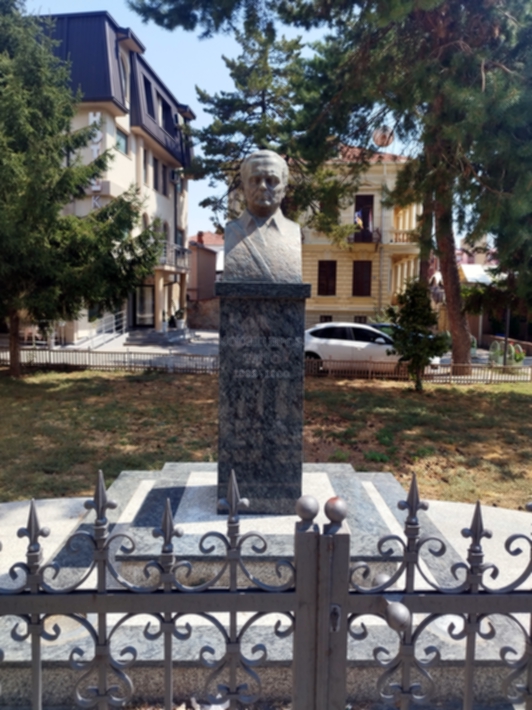
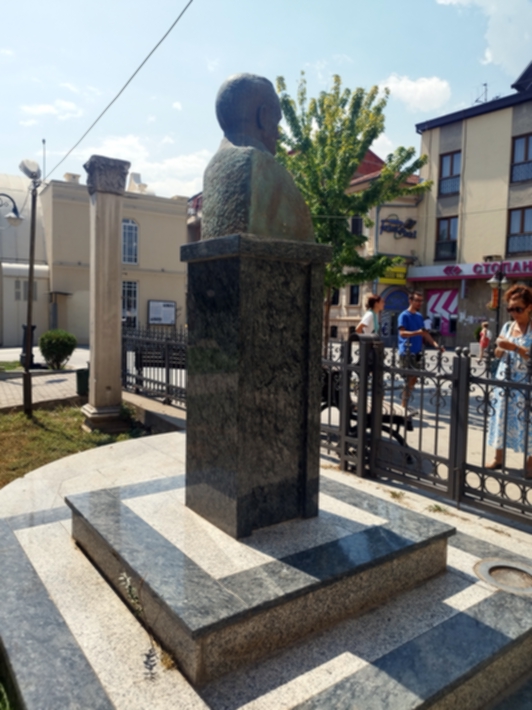
#StatuaUrbana_PatrimoniumCultura


Península Balcânica

Balkan Peninsula 


A Península Balcânica é a maior destas três penínsulas do sul europeu. Com um istmo tão largo, que começa no Mar Adriático e que inclui a Eslovénia, o sul da Áustria, a Hungria, o extremo sul da Eslováquia, a cadeia montanhosa a sul de Lviv, na Ucrânia e atravessando a Moldávia, o istmo desta península que mais parece uma abside, vai dar ao mar negro perto de Odessa.

Entre estas três penínsulas que marcam com clareza a diversidade cultural do sul, a Península Balcânica é a mais rica em diversidade, em estilos, em línguas e em alfabetos. A tradição histórica, o relevo e o clima dos lugares marcam e diferenciam o dispositivo da estatuária urbana. Com uma massa territorial pouco maior que a Península Ibérica, que só tem dois países, os Balcãs têm território de mais de doze países, na totalidade ou uma parte. Ali coexistem os três alfabetos oficiais da União Europeia, o latino, o grego e o cirílico. Nesta península convive o passado imperial romano com o passado imperial otomano.

Todos estes aspetos culturais e físicos desta região se refletem na composição escultórica das estátuas! Por exemplo, a Península Itálica, que é hoje um só país, mantém uma constante proporcional, que notamos repetir nos Balcãs, na Roménia. Onde nos pareceu encontrar mais diversidade de estilo e de materiais foi na Grécia. É notável por todos os países do sul desta península a influência do academismo italiano e do realismo socialista soviético, mesmo em obras posteriores. O território que vai de Edirne a Istambul, de administração turca, também é Balcãs, mas já apresenta casos com outra linha de estilização da imagem.


The Balkan Peninsula is the largest of these three southern European peninsulas. With such a wide isthmus, starting at the Adriatic Sea and including Slovenia, southern Austria, Hungary, the southern tip of Slovakia, the mountain range south of Lviv in Ukraine and running through Moldova, the isthmus of this peninsula that It looks more like an apse, it leads into the black sea near Odessa.

Among these three peninsulas that clearly mark the cultural diversity of the south, the Balkan Peninsula is the richest in diversity, styles, languages ​​and alphabets. The historical tradition, relief and climate of places mark and differentiate the device of urban statuary. with a territorial mass slightly larger than the Iberian Peninsula, which only has two countries, the Balkans have the territory of more than twelve countries, in whole or in part. There, the three official alphabets of the European Union coexist: Latin, Greek and Cyrillic. On this peninsula, the Roman imperial past coexists with the Ottoman imperial past.

All these cultural and physical aspects of this region are reflected in the sculptural composition of the statues! For example, the Italian Peninsula, which today is a single country, maintains a proportional constant, which we see repeated in the Balkans, in Romania. Where we seemed to find the most diversity of style and materials was in Greece. The influence of Italian academicism and Soviet socialist realism is notable throughout the southern countries of this peninsula, even in later works. The territory that goes from Edirne to Istanbul, under Turkish administration, is also Balkans, but already presents cases with another line of image stylization.


>Página Inicial | home page     >Eventos&Realizações | Achievements        >Arquivo - Anteriores produções | Archive - Previous productions

Hungria: Makó e Budapeste

---

Hungary: Makó and Budapest

Makó


Makó é uma pequena cidade húngara, junto à fronteira com a Roménia e a cerca de 100 km de Timisoara, cidade proeminente da região.

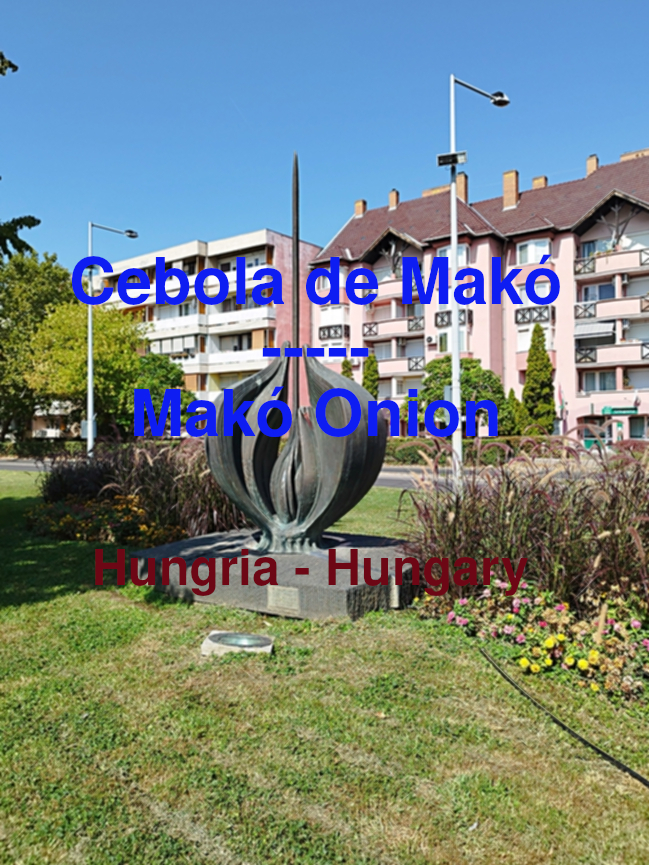
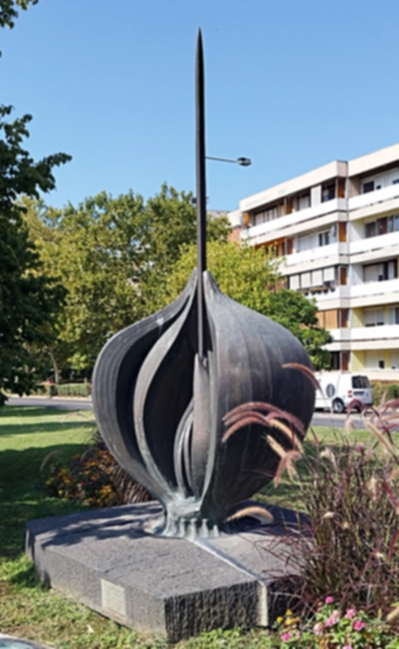
Apresenta uma boa quantidade de obras de statua urbana em relação à sua demografia de 22.514 habitantes, estimada em 2019. Com efeito, apresenta composições militares com estátua, homenagens aos caídos, dois encorpados conjuntos estatuários de individualidades políticas junto ao parlamento local, estátuas de artistas, músicos, uma sequência de bustos ao longo de um alpendre, estátua equestre historicista. Mas, aquela que mais nos sobressaiu foi a "Cebola de Makó", uma obra única na representação estatuária do vegetal!

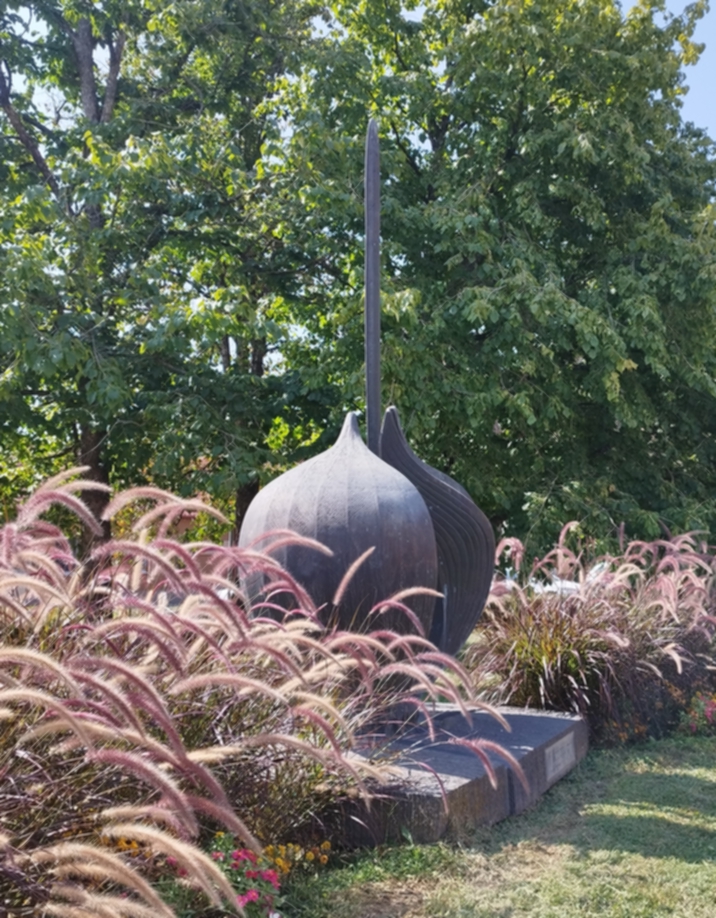
A Cebola de Makó é uma obra de elevada mestria escultórica. Junta o conhecimento naturalista da forma da cebola, dos cortes e do desfolhar com o simbolismo na geometria vertical da haste do rebento. E só com uma qualidade destas é possível estarmos no outro lado da rua e virmos logo o que alguém exclamou: olhem, está ali a estátua de uma cebola!

Claro que é logo evidente, se eles têm aqui uma estátua de uma cebola é porque tem lá boas cebolas. É a mesma estrutura significante da estátua da vaca leiteira de Leuwarden, nos Países Baixos. Assim, a representação estatuária documenta o que há de melhor na região, há regiões da vaca leiteira, há regiões da cebola, há regiões do vinho, há regiões da pesca, e até do choco frito, em Setúbal, onde o rio Sado é aí conhecido pelo rio do choco devido à sua abundância e qualidade.

Esta belíssima representação vegetalista da Cebola de Makó é obra do escultor Ferenc Sütő e é do ano 2000.

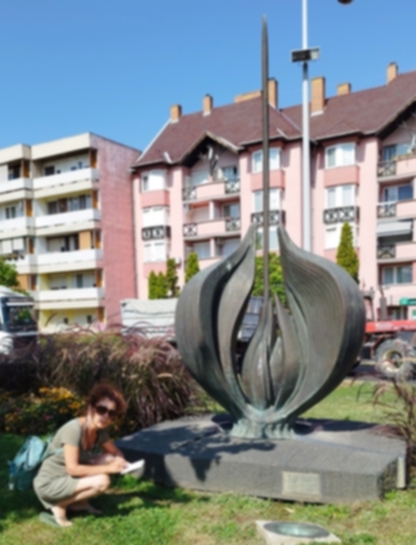
Tem na sua base a inscrição “Készült a makói polgárok akaratából és abban a reményben, hogy a makói hagyma van, volt, lesz.", que significa “Foi feito pela vontade dos cidadãos de Makó e na esperança de que a cebola de Makó exista, ontem, hoje e amanhã”.

A sua edificação foi baseada em decreto do governo local Obras de arte públicas sob proteção local: Hagymaszobor Kálvin utca-Szegedi utca hr.: 4669/2 Informações: mako.hu - condado de Csongrád-Csanád, Makó, esquina de Kálvin utca e Szegedi utca.


Makó is a small Hungarian town, close to the border with Romania and about 100 km from Timisoara, a prominent city in the region.

It presents a good number of urban statue works in relation to its demographic of 22,514 inhabitants, estimated in 2019. In fact, it presents military compositions with statues, tributes to the fallen, two large statuary sets of political individuals next to the local parliament, statues of artists , musicians, a sequence of busts along a porch, historicist equestrian statue. But the one that stood out the most to us was the "Onion of Makó", a unique work in the statuary representation of the vegetable!

Makó's Onion is a work of high sculptural mastery. It combines naturalistic knowledge of the onion's shape, cuts and defoliation with the symbolism in the vertical geometry of the shoot's stem. And only with quality like that is it possible to stand on the other side of the street and immediately see what someone exclaimed: look, there's a statue of an onion!

Of course it's immediately evident, if they have an onion statue here it's because they have good onions there. It is the same significant structure as the Leuwarden milk cow statue in the Netherlands. Thus, the statuary representation documents what is best in the region, there are dairy cow regions, there are onion regions, there are wine regions, there are fishing regions, and even fried cuttlefish, in Setúbal, where the Sado river is there. known for the cuttlefish river due to its abundance and quality.

This beautiful vegetal representation of the Makó Onion is the work of sculptor Ferenc Sütő and is from the year 2000.

It has at its base the inscription “Készült a makói polgárok akaratából és abban a reményben, hogy a makói hagyma van, volt, lesz.", which means “It was made by the will of the citizens of Makó and in the hope that the Makó onion exists , yesterday, today and tomorrow”.

Its construction was based on a local government decree Public works of art under local protection: Hagymaszobor Kálvin utca-Szegedi utca hr.: 4669/2 Information: mako.hu - Csongrád-Csanád county, Makó, corner of Kálvin utca and Szegedi utca.


Makó e Budapeste foram as cidades registadas na Hungria. Em makó foi efectuado o levantamento da quase totalidade das obras de statua urbana. Em Budapeste observámos o parque estatuário Memento Park, iniciativa de grande valor democrático e cultural de que muitos hungaros se orgulham.

Efetuámos também fotografia noturna de statua urbana em Budapeste, onde se pode observar os recortes e ambientes criados pela iluminação artificial na obra.

Num breve rastreio sistemático entre as duas margens do Danúbio observaram-se boas composições em pedra e em bronze, onde se realça um conjunto de rapazes a jogar ao berlinde, ou equivalente e uma rapariga brincando com uma bola na boca do seu cão. obras de grande sensibilidade e beleza com uma notavel qualidade do bronze.

Mais sobre statua urbana na Hungria


Makó and Budapest were the cities registered in Hungary. In makó, almost all urban statue works were surveyed. In Budapest we see the Memento Park statue park, an initiative of great democratic and cultural value that many Hungarians are proud of.

We also carried out night photography of an urban statue in Budapest, where you can observe the cutouts and environments created by the artificial lighting in the work.

In a brief systematic survey between the two banks of the Danube, good compositions in stone and bronze were observed, highlighting a group of boys playing marbles, or equivalent, and a girl playing with a ball in her dog's mouth. works of great sensitivity and beauty with remarkable quality of bronze.

More about urban statues in Hungary


- Estatuária - Estátuas - Monumentos estatuários-

Statua urbana

- Statuary - Statues - Statuary monuments -


    Copyright © #StatuaUrbana_PatrimoniumCultura 8 de dezembro de 2024


Contact Statua Urbana           


Turquia - Edirne

Türkiye - Edirne


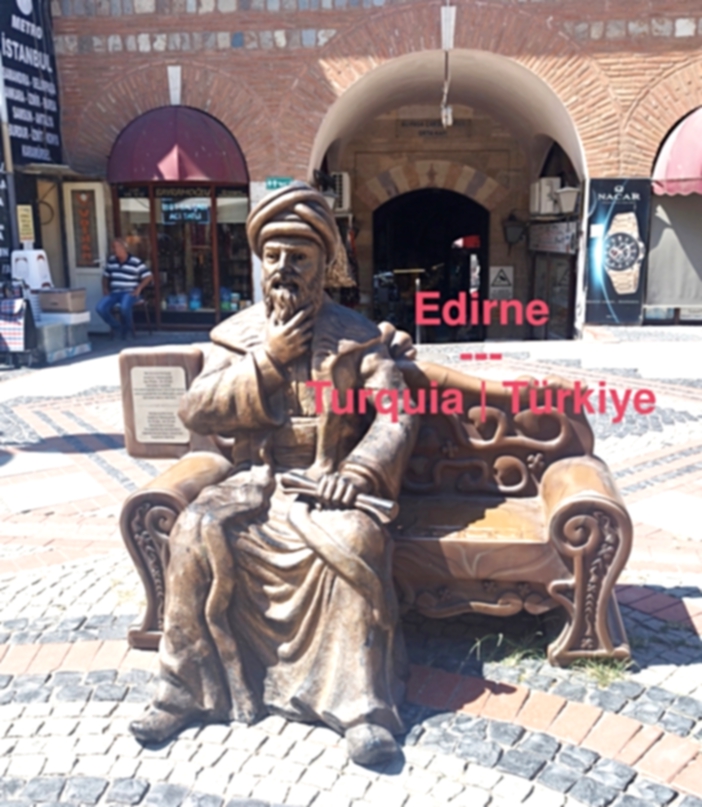
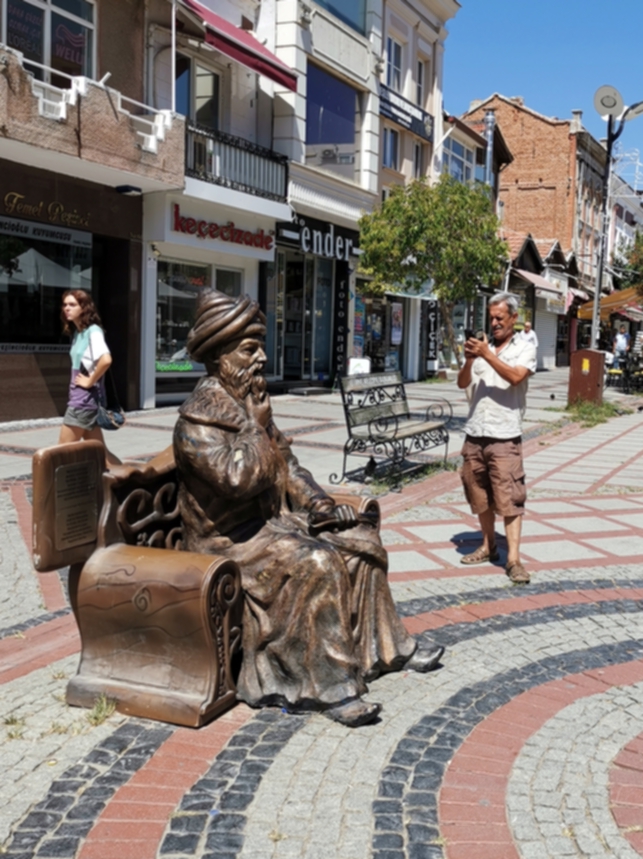
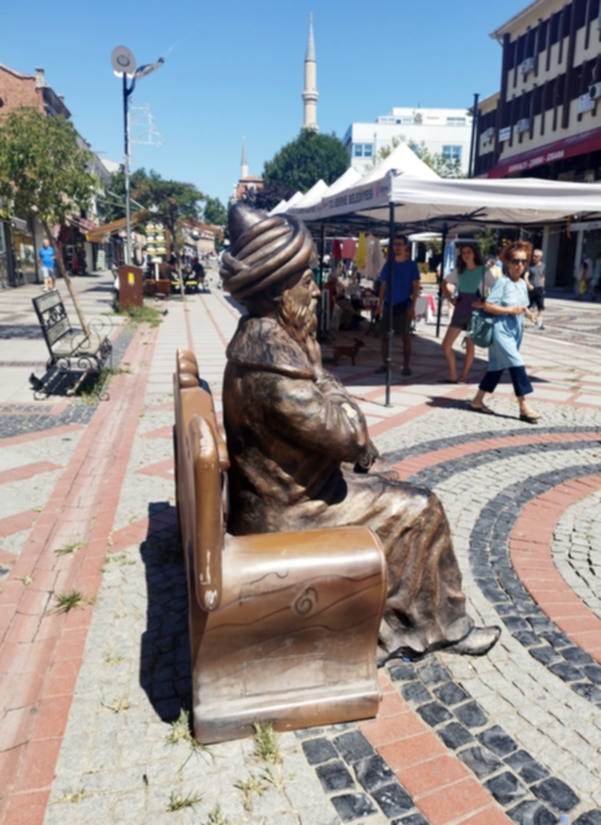
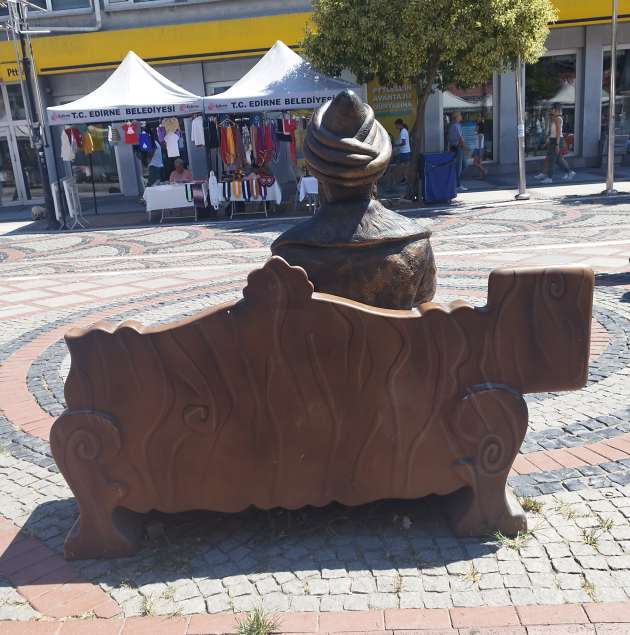
Estátua de Mimar Sinan junto ao mercado em Edirne


Mimar Sinan (nome completo Koca Mi'mâr Sinân Âğâ) (c. 1488–1490, Istambul - 17 de julho de 1588) foi um famoso arquiteto do império Otomano. Trabalhou para os sultões otomanos: Selim I, Solimão, o Magnífico, Selim II e Murade III.

A sua obra mais relevante é a Mesquita de Selim em Edirne, apesar de possivelmente a sua obra mais famosa ser a Mesquita de Solimão em Istambul.

É uma obra em pasta sintética, provável poliéster reforçado com fibra de vidro, apresenta uma placa com inscrição bilingue turco / inglês mas não apresenta marcas de autor ou data inscritos no corpo da escultura.


Statue of Mimar Sinan next to the market in Edirne


Mimar Sinan (full name Koca Mi'mâr Sinân Âğâ) (c. 1488–1490, Istanbul – 17 July 1588) was a famous architect of the Ottoman Empire. He worked for the Ottoman sultans: Selim I, Suleiman the Magnificent, Selim II and Murad III.

His most relevant work is the Selim Mosque in Edirne, although possibly his most famous work is the Suleiman Mosque in Istanbul.

It is a work in synthetic paste, probably polyester reinforced with fiberglass, it has a plaque with a bilingual Turkish/English inscription but no author or date marks inscribed on the body of the sculpture.

Ver mais statua urbana Edirne, Turquia

See more urban statue Edirne, Türkiye


Grécia

Greece


Macedónia do Norte – Bitola (Битола)

North Macedonia (Битола)

A Macedónia do Norte, oficialmente República da Macedónia do Norte (em macedónio: Република Северна Македонија) é um país interior dos Balcãs, sem saída para o mar. Fez parte da antiga Jugoslávia tendo declarada a sua independência em 1991. As costas marítimas mais próximas são a oeste a costa albanesa a aproximadamente 100 Km que dá para o Mar Adriático e a sudeste as costas gregas que dão para o mar Egeu na região de Salónica.

A atual Macedónia do Norte faz parte de territórios sucessivamente dominado por impérios e forças diferentes. Colonizados pelos eslavos e os búlgaros no século VI. A região foi depois dominada pelos bizantinos até o século XII. Fizeram sucessivamente parte do império romano, do império otomano e por fim da Federação Jugoslava.

No século XIX consistia de uma região da Albânia central e do noroeste da Macedónia com sua capital em Manastir, atual Bitola. O território da Macedónia tornou-se parte do vilaiete de Manastir até o fim do domínio otomano em 1912.

North Macedonia, officially the Republic of North Macedonia (Macedonian: РепублиѺа Северна Македонија) is an inland country in the Balkans, landlocked. It was part of the former Yugoslavia and declared its independence in 1991. The closest sea coasts are to the west the Albanian coast, approximately 100 km away, which faces the Adriatic Sea, and to the southeast, the Greek coasts which face the Aegean Sea in the Thessaloniki region.

Current North Macedonia is part of territories successively dominated by different empires and forces. Colonized by the Slavs and the Bulgarians in the 6th century. The region was then dominated by the Byzantines until the 12th century. They were successively part of the Roman Empire, the Ottoman Empire and finally the Yugoslav Federation.

In the 19th century it consisted of a region of central Albania and northwest Macedonia with its capital at Manastir, now Bitola. The territory of Macedonia became part of the village of Manastir until the end of Ottoman rule in 1912.